
Landscape Design for North Georgia Yards
Landscape property design built around your property and your vision. From plants, trees, and custom landscape beds to borders, groundcover, and seasonal color, we bring every element together to create an outdoor space built to look great, grow properly, and last.
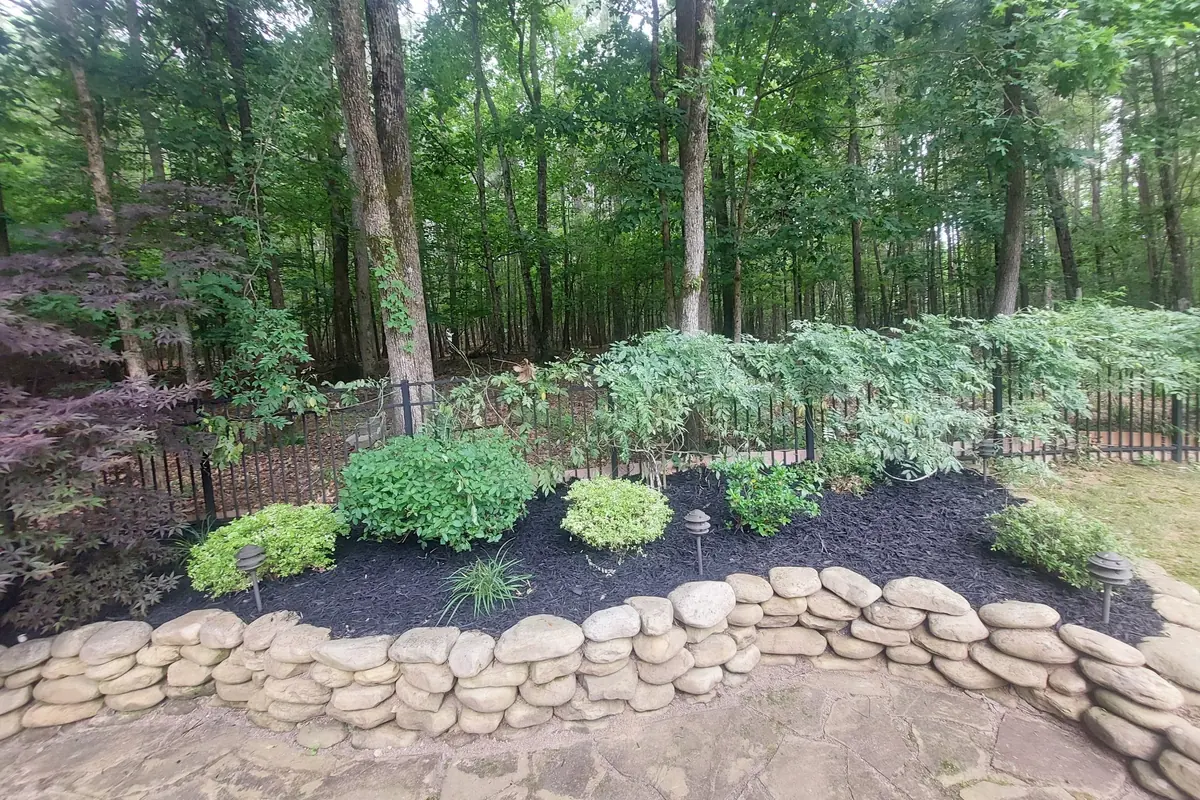
Design starts with the dirt and the water
A landscape plan in North Georgia is really two plans. There is the one you can see, which is the beds, the borders, the trees and the color. Underneath it is the one that decides whether any of it lives: soil, sun and where the water goes when it rains hard.
Our soil is Piedmont red clay. It holds nutrients well and it holds water badly. Dig a hole in it, drop in a plant that wants drainage, backfill with the same clay, and you have built a bowl that stays full for two days after every storm. Roots sit in it and rot. This is the single most common reason a new bed looks great in April and thin by August. The fix is not a bigger plant. It is amending the bed, breaking the sidewall of the hole so roots can leave it, and setting the crown slightly high so water sheds instead of pooling.
The second half is where water moves across the property. If the yard already sheets water toward the foundation or ponds behind the patio, planting into that is money on the ground. We look at grade before we look at plants, and if the property needs drainage work first we say so instead of selling you a bed that will drown.
What the design includes
- A walk of the property with sun and shade noted through the day, not guessed at
- A layout drawing showing bed lines, plant locations and mature spacing
- A written plant list with common names, sizes at install, and how big each plant actually gets
- Bed prep spelled out: edging, soil amendment, weed barrier where it makes sense, and the mulch or pine straw finish
- Trees and anchor shrubs placed off the foundation, the septic field and the power line, not just where they look good on paper
- Seasonal color spots called out so you know what changes twice a year and what does not
- A phase plan if the whole thing is more than you want to spend at once
Plants that hold up in Cobb and Cherokee County
Most of North Georgia sits in USDA zone 7b or 8a. That is a wide palette, which is exactly why so many yards get overplanted with the wrong things. The failures we get called to replace are almost always one of three mistakes: a sun plant put in the shade of a mature oak, a shrub with a ten foot mature width planted three feet off the house, and something that needs sharp drainage planted straight into clay.
Under pines and hardwoods, root competition is brutal and the soil dries fast even in shade. Along a hot west-facing wall, brick radiates heat well into the evening and cooks anything marginal. Those are two different plant lists on the same property, and the design should say so.
We also plan for deer. In the wooded subdivisions around Acworth, Woodstock and Kennesaw, deer pressure is real and it decides what survives the first winter.
Slope, terraces and the honest budget conversation
A lot of these lots are cut into a hill. Planting a steep bank is a losing fight because mulch washes, straw slides and the mower cannot hold the line. On real slope, the answer is usually a low retaining wall or a terrace that turns the bank into two usable levels. That is a hardscape job, and because we build walls and patios in house, the design and the construction come from the same company rather than a designer handing you a drawing and wishing you luck finding somebody to build it.
The other thing worth saying plainly: a full landscape does not have to happen in one season. Front approach this year, back yard and patio next year, screening along the property line after that. A phased plan that gets finished beats a complete plan that stalls halfway through.
From Walk-Through to Planted
-
We walk it and listen
What you want to look at, what you want hidden, how much upkeep you actually want to sign up for, and where the water goes in a hard rain. Free, and no pressure after.
-
You see the layout and plant list
Bed lines, plant placement at mature size, and the written list with the price. You change it on paper, which costs nothing, instead of changing it in the ground, which costs plenty.
-
We prep, plant and finish
Beds cut and amended, plants set at the right depth, straw or mulch installed, and the property blown clean. Then we tell you exactly how to water it for the first month.
Landscape Design FAQs
Do I pay for the design separately?
The walk-through and the estimate are free. How the design itself is handled depends on the size of the project, and Hunter will tell you the number before any work starts. You will not get a surprise design fee on an invoice.
When is the best time to plant in Georgia?
Fall is the best window for most trees and shrubs here. The soil is still warm, the air is cooler, and roots get months to establish before summer heat. Spring works too. Midsummer planting is possible but it needs real watering discipline, and we will say so before you commit to it.
Why do my plants keep dying in the same bed?
Nine times out of ten it is water, not the plant. Either the bed sits in clay that holds water like a bowl, or the grade sends runoff into it every storm. Replacing the plant without fixing the drainage just buys another year. We look at the grade first.
Can you work with the plants I already have?
Yes. Healthy established shrubs and trees are worth keeping, and some just need to be moved, limbed up or given a real bed line. A design that throws out everything on the property is usually easier for the contractor, not better for the owner.
Can the project be done in phases?
Yes, and on bigger properties that is usually the smart move. We lay out the whole plan, then break it into phases that each look finished on their own, so the yard never sits in a half-done state waiting on the next budget.
Let's Look At Your Yard
Tell us what you want the property to be and we will come walk it. Free estimates, residential and commercial, all across Georgia.
Licensed & Insured · 10+ Years of Trusted Service · Serving All of Georgia